Chefs receive training on the job, but many choose to attend a culinary arts program at a community or technical college. Some schools offer four-year degrees in food science while other schools such as the Culinary Institute of America and Johnson & Wales University.
Chefs and head cooks are sometimes known by different names including sous chef, kitchen manager, food and beverage director, and pastry chef. Chefs are trained in food quality, preparation, presentation and safety, and are knowledgeable about food pairings and nutrition. These professionals are familiar with food costs and know how to manage and order inventory, supplies, equipment and related tools.
Training
At some restaurants, chefs rise up through the ranks from line cook to kitchen manager. These people learn everything they need to know on the job. If they’re fortunate, the talented cook may someday open his or her own restaurant. At finer institutions, working your way up through the ranks may not be sufficient. With custom menus, fine wines and an atmosphere to match, discriminating diners want and expect foods that are beyond compare. Chefs at high-end restaurants have typically completed many years of educational and on-the-job training, completing two- or four-year degrees on the way to their current position.
 |
view current positions for head chefs |
Salaries
Salaries for the chefs and head cooks vary depending on experience, employer and location. In May 2010, the U.S. Bureau of Labor Statistics reported that the mean average wage for these professionals was $44,780. Salaries ranged from $23,260 to $70,960 with a median average wage of $40,630. Those in the middle 50 percent had salaries ranging from $30,540 to $54,350.
Employers
Of the 90,510 people identified as chefs and head cooks by the BLS in 2010, 52 percent work in full-service restaurants. The average mean wage in this industry was $42,420 or about $2,300 less than the national average. Pay was higher for those working for hotels and other traveler accommodation businesses, with an average salary of $51,900 paid. Those chefs working for caterers, food contractors and mobile food providers averaged $45,550 per year. Higher levels of pay, but with few openings were offered by the federal government with wages averaging $65,180, food manufacturers at $57,350, and at grocery stores and food wholesalers, with wages averaging $55,760 per year.
Locations
States where pay is highest for chefs and head cooks included New Jersey, Connecticut, Rhode Island, Delaware and California. The pay in these states ranged from $48,610 to $61,960. On the other end of the spectrum, states such Idaho, South Dakota, and Georgia had the lowest mean annual wages with these professionals earning from $30,420 to $36,710 per year. Local pay rates varied widely as well with some metropolitan areas offering salaries well above the national norm. For example, chefs in the greater New York City area received by far the highest wages in the nation, averaging $79,820 per year for pay in the top 10th percentile. New York was followed by Nassau-Suffolk counties on Long Island, where pay averaged $63,510 per year.
Forecast
The BLS estimates that overall job growth for chefs, head cooks and food preparation and serving supervisors will remain unchanged through 2018. Competition will be keen for jobs in high scale restaurants as high pay attracts the best workers. Most of the opportunities for work will come as experienced chefs leave the field or retire. Those chefs with a food specialty may do well including chefs who are able to endure long hours working on their feet.
References
O-Net Online: Summary Report for: 35-1011.00 – Chefs and Head Cooks
U.S. Bureau of Labor Statistics; Occupational Employment Statistics; 35-1011 Chefs and Head Cooks
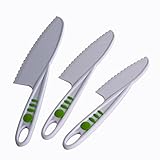
- Our Curious Chef 3-Piece Nylon Knife Set is a superb collection of flawless kitchen knives for young ones to engage beginning cooking
- Set includes 1 small, 1 medium, and 1 large nylon knife all with serrated cutting edges, blunt tips; ergonomic handles; and soft touch button grips
- Appropriate for young gastronomic apprentices ages 5 and up | Dishwasher safe
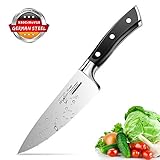
- 【German High Carbon Stainless Steel】 The professional utility kitchen knife razor-sharp blade made of premium high carbon German stainless steel...
- 【Full Tang Ergonomic Handle】Full tang construction and protective bolster offering the kitchen knife perfect balance and incredible robustness....
- 【Multi-purpose Chef Knife】The premier chefs knife cooking knife with satisfying heft is ideal for chopping, slicing, dicing and mincing all...
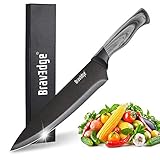
- 🎁【Professional Chef Knife】 Bravedge professional chef knife is made from high quality stainless steel providing extraordinary performance...
- 🎁【Unrivaled Performance】Compared with other knives, the unique design and craftmanship of the kitchen knife reduces drag and minimizes...
- 🎁【Sturdy & Ergonomic】The chef knife is well balanced and combined with an ergonomic wood grain handle. It offers a secure and comfortable...
Last update on 2020-03-19 / Affiliate links / Images from Amazon Product Advertising API
-------------------------------------------------------------------------------------------------------------
end of post idea
-------------------------------------------------------------------------------------------------------------
view home improvement ideas at our Photo Remodeling center
Helpful article? Leave us a quick comment below.
And please share this article within your social networks.