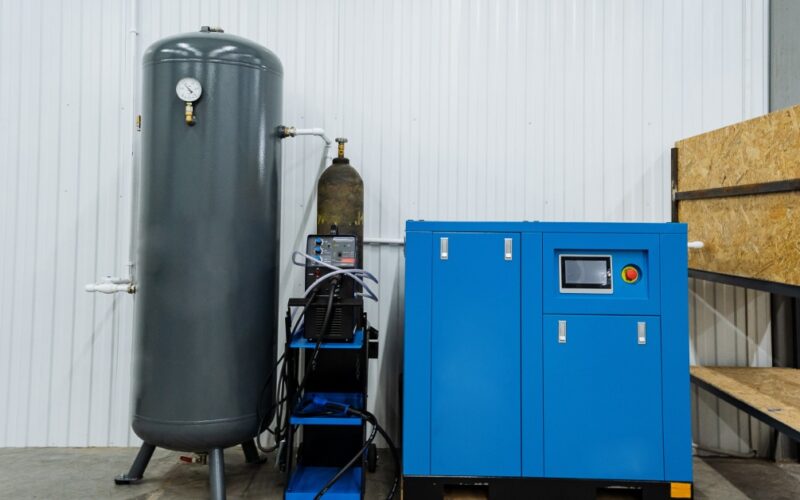
Understanding the key considerations when buying a compressed air dryer helps you avoid costly mistakes and ensures the system meets your specific performance demands. By evaluating your application, environment, and long-term operating costs, you can choose a dryer that delivers reliable, efficient moisture control for years to come.
Identify Your Application Requirements
Start by defining how you plan to use the compressed air. Different industries demand different air quality levels. For example, food processing, pharmaceuticals, and electronics manufacturing often require extremely dry air to prevent contamination or defects. In contrast, general manufacturing or automotive shops may tolerate higher dew points.
You should also determine the required pressure dew point for your process. Refrigerated dryers work well for many standard applications, while desiccant dryers suit environments that require very low moisture levels. Matching the dryer type to your operational needs ensures consistent performance and prevents overpaying for unnecessary features.
Evaluate Capacity and Airflow
Accurate air dryer sizing plays a critical role in performance and efficiency. An undersized unit struggles to keep up with demand, allowing moisture to pass through the system. An oversized unit increases upfront costs and may operate inefficiently.
Measure your system’s maximum airflow in cubic feet per minute and account for peak demand rather than average usage. Consider future expansion plans as well. If your facility expects growth, selecting a dryer with additional capacity can prevent another capital expense later. Always evaluate inlet temperature and pressure conditions, as these factors directly affect dryer performance.
Consider Installation Environment
The surrounding environment influences dryer reliability and lifespan. High ambient temperatures, poor ventilation, or dusty conditions can reduce efficiency and strain internal components. Make sure the installation area provides adequate airflow and remains within the manufacturer’s recommended temperature range.
You should also assess available space and utility connections. Some dryers require additional filtration, drains, or electrical upgrades. Planning for these requirements in advance streamlines installation and avoids unexpected costs. Proper placement and setup help maintain consistent operation and extend equipment life.
Factor in Maintenance and Operating Costs
Initial purchase price represents only part of the total investment. Energy consumption, replacement parts, and routine maintenance significantly affect long-term expenses. Energy-efficient models may cost more upfront but reduce monthly utility bills.
Review the maintenance schedule and confirm that service intervals align with your team’s capabilities. Easy access to components simplifies inspections and part replacements. Reliable condensate management systems also minimize manual intervention and protect downstream equipment. By focusing on lifecycle costs rather than sticker price alone, you can make a more strategic investment.
Making a Final Decision
Selecting the right unit requires careful planning, technical evaluation, and a clear understanding of your operational goals. When you fully assess airflow demands, environmental conditions, and long-term expenses, you make smarter decisions that protect both productivity and profitability. Keeping these considerations when buying a compressed air dryer in mind ensures you choose equipment that delivers dependable performance and lasting value.
Image Credentials: By Aleksey, 1839420654
end of post … please share it!
PAYING FOR COLLEGE: getting the aid you need
-------------------------------------------------------------------------------------------------------------
end of post idea
-------------------------------------------------------------------------------------------------------------
view home improvement ideas at our Photo Remodeling center
Helpful article? Leave us a quick comment below.
And please share this article within your social networks.