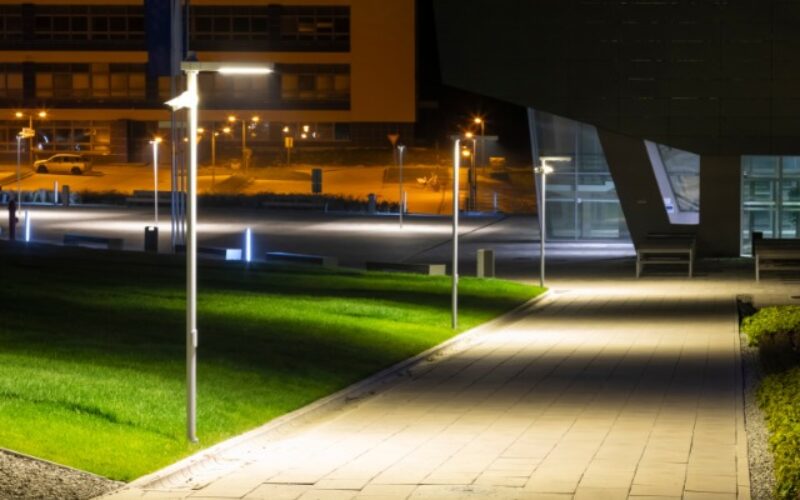
For colleges and other learning environments, outdoor campus lighting should support daily routines as much as safety and security planning. A strong lighting plan helps people follow walkways and notice potential hazards before problems develop.
Why Outdoor Lighting Matters on Campus
Campus activity doesn’t stop when classes end. Evening labs, sports practices, student events, library hours, and late shifts keep people moving across outdoor areas well after dark.
Poor lighting can create confusion near building entrances, parking lots, and more. It can also increase the risk of falls and uncomfortable spaces that students may avoid. Effective outdoor lighting gives campus administrators a practical way to support safety without making spaces feel harsh or overlit. The goal should focus on clear visibility and reliable operation.
Key Areas That Need Attention
Every campus has different layouts, but some outdoor areas usually need the closest lighting review. Administrators should look for places where students walk and gather between buildings.
Important campus lighting zones include:
- Walkways between academic buildings
- Parking lots and parking garages
- Residence hall entrances
- Bus stops and rideshare pickup areas
- Athletic fields and recreation spaces
- Stairways, ramps, and accessible routes
- Building exits and emergency gathering areas
Lighting in these zones should help people read signs and navigate confidently. Dark gaps between fixtures can reduce the value of otherwise well-lit areas.
Balancing Visibility and Glare
More light does not always create a safer campus. Overly bright fixtures can reduce visibility and bother nearby residence halls or neighboring properties. Good lighting design directs light where people need it most. Fixtures should illuminate the ground, entrances, signs, and activity areas without shining into windows or directly into someone’s eyes.
Color temperature also matters. Many campuses choose neutral white lighting because it supports visibility without creating an overly cold or intense look.
Know Where Standards Fit
Outdoor campus lighting should align with safety goals and practical maintenance needs. Schools that already review interior standards can use resources on school lighting requirements to better understand how lighting levels, glare control, and fixture choices affect educational spaces.
Campus teams should also coordinate with facilities and local code officials before major upgrades. This helps avoid uneven improvements that solve one problem while creating another.
Maintenance Keeps Lighting Effective
Even the best lighting plan loses value without routine maintenance. Dirt, aging lenses, damaged poles, blocked fixtures, and burned-out lamps can reduce visibility across campus.
Facilities teams should schedule regular nighttime inspections because some lighting problems only appear after dark. A daytime walk-through may miss glare, shadows, and uneven coverage.
Building a Safer Nighttime Campus
Outdoor lighting cannot replace campus security, clear policies, or personal awareness. It can, however, make those efforts work better by improving visibility and helping people feel more confident in shared spaces.
A thoughtful campus safety lighting plan focuses on the places where people actually move and gather. With the right fixtures, controls, standards, and maintenance habits, schools can create outdoor environments that support safer campus life after dark.
Image Credentials: Milan Noga reco, 790112435
end of post … please share it!
PAYING FOR COLLEGE: getting the aid you need
-------------------------------------------------------------------------------------------------------------
end of post idea
-------------------------------------------------------------------------------------------------------------
view home improvement ideas at our Photo Remodeling center