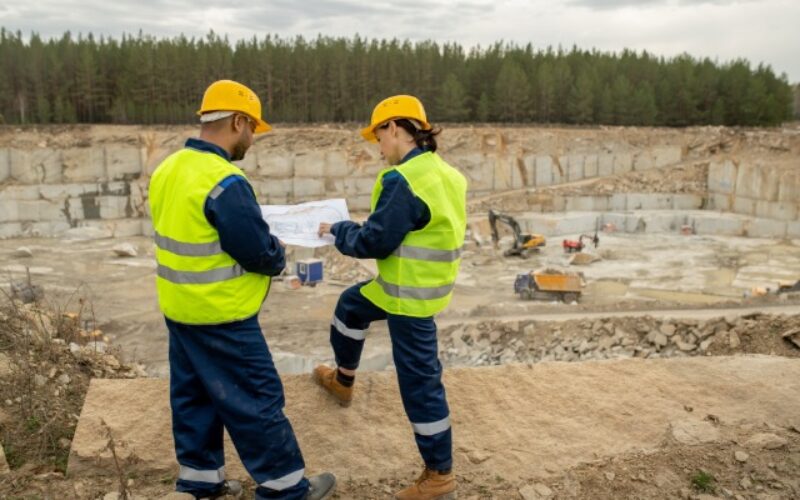
Some workers operate massive machines. Others inspect systems, track production, manage risk, or study the ground itself.
If you’re studying engineering, environmental science, business, mechanics, or safety, there’s a role designed for your skillset. Learn about the different jobs you can do on a mining jobsite to find a potential career path for your interests.
Equipment Operator
Equipment operators drive haul trucks, loaders, dozers, and excavators to move rock, soil, and raw material. The role suits students who like hands-on work and fast-paced decision-making.
Operators need sharp focus and strong judgment. They read site conditions, follow traffic patterns, and respond quickly to changing ground or weather. Students in diesel technology, heavy equipment training, or construction-related programs may find this path especially appealing.
Maintenance Technician
Maintenance technicians are essential for maintaining functional mining equipment. One failed component stalls a major operation and puts people’s safety at risk. These professionals inspect parts, diagnose problems, and repair systems before a breakdown slows production.
Students who enjoy mechanical systems, troubleshooting, and shop work often thrive here. A background in industrial technology or mechanical training helps. For example, students will need to understand the functions of off-highway driveline components, so they can repair equipment properly and conduct precise maintenance.
Mine Geologist
Students in geology, earth science, or environmental programs might enjoy becoming a mine geologist. They study rock formations, mineral deposits, and drilling data. These professionals help teams decide where to mine, how to plan extraction, and how to use resources wisely. The job blends fieldwork with analysis, which makes it a strong fit for students who enjoy science but don’t want to sit at a desk all day.
Site leaders depend on accurate information to make safe, cost-effective decisions. Therefore, a geologist must pay close attention to detail and communicate their findings clearly.
Safety Coordinator
Safety shapes every task on a mining site. Safety coordinators protect workers and strengthen jobsite standards. They inspect work areas, review procedures, lead training, and investigate incidents. This job proves that a mining career isn’t only about machinery or extraction; it can center on people, planning, and prevention.
Students who value leadership, communication, and problem-solving may connect with this work. Degrees in occupational safety, industrial hygiene, or environmental health can lead here.
Shift Supervisor
Another role you can have on a mining jobsite is a shift supervisor. Shift supervisors lead crews and manage daily operations. Assigning roles, solving problems, and monitoring outputs are the supervisor’s primary responsibilities. The role fits students who want responsibility and who work well under pressure.
Successful shift supervisors know the site, understand the employees’ skillsets, and communicate firm decisions. They often build experience in entry-level roles before moving into leadership.
The mining industry offers far more than one career path. As students explore majors and career options, mining can stand out as a field where ambition, training, and curiosity lead to a rewarding future.
Image Credentials: By pressmaster, File #436519942
end of post … please share it!
PAYING FOR COLLEGE: getting the aid you need
-------------------------------------------------------------------------------------------------------------
end of post idea
-------------------------------------------------------------------------------------------------------------
view home improvement ideas at our Photo Remodeling center
Helpful article? Leave us a quick comment below.
And please share this article within your social networks.