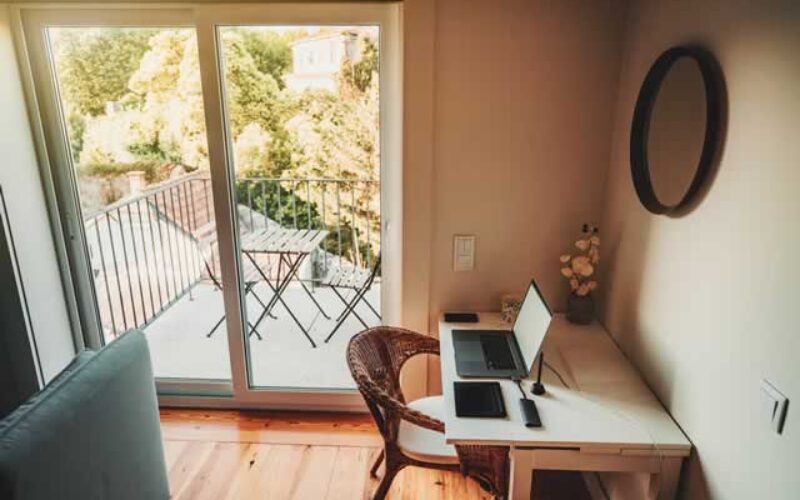
Renting your own apartment while in college offers real, measurable advantages: greater privacy, more control over your finances, stronger life skills, and the kind of independence that genuinely prepares you for what comes next.
If you’re weighing your options, here are five reasons why apartment living deserves serious consideration.
Privacy Improves Your Focus
Dorm life is social by design, and that’s not always a good thing when you have an exam in the morning. According to a survey of 1,003 college students conducted by Grand Canyon University and Grand Canyon Education, students living in dormitories represented the largest group — 35% — reporting that their housing negatively affected their ability to focus on academics.
In contrast, students living in off-campus apartments were among the most likely to say their housing made it easier to concentrate on their studies.
Having your own apartment means you control the noise level, the schedule, and the atmosphere. You can close the door, sit at your own desk, and study without negotiating silence with a stranger assigned to your room.
That kind of environment isn’t just more comfortable — it directly supports the academic performance you’re working so hard to achieve.
A 2025 survey published by Inside Higher Ed, drawing on data from 418 institutions, reinforced this trend: today’s college students increasingly prioritize privacy in their living spaces, with apartment-style housing ranking as the most requested option — ahead of suite-style and traditional dormitory living.
Apartment Living Can Cost Less
The sticker price of a college dorm can be deceptively high. According to the Education Data Initiative’s 2026 analysis, the average cost of a dorm room at a four-year college in AY2025-26 is $8,196 per year, and that figure doesn’t include the mandatory meal plan, which adds another $6,205 on average — bringing the total to roughly $14,398 annually just for housing and food.
Apartment living gives you more control over these expenses. When you cook your own meals instead of paying for a campus meal plan, the U.S. Bureau of Labor Statistics data shows the average annual per-person grocery spend is approximately $2,593 — less than half the cost of a typical college meal plan.
Splitting rent with one or two roommates reduces your housing burden further. You pay for utilities you actually use, not a bundled package determined by the institution.
The savings don’t happen automatically — they require a budget and some discipline — but apartment living gives you the tools to manage your money in a way that a dorm simply doesn’t.
Freedom Builds Responsibility
College dormitories operate under institutional policies: quiet hours, guest restrictions, mandatory meal plan participation, and resident advisors who enforce the rules. These structures exist for good reasons, but they also limit your ability to shape your own daily life.
An apartment operates differently. You set the schedule. You decide when guests can visit. You determine how the space is organized and maintained. That kind of autonomy isn’t just liberating — it’s educational. Making real decisions about your living environment, and dealing with the consequences of those decisions, develops a level of personal accountability that dormitory life rarely requires.
This isn’t about having no rules. Lease agreements, landlords, and neighbors all come with their own expectations. But navigating those relationships is closer to what adult life actually looks like, making the apartment experience a genuine rehearsal for independence.
Intentional Relationships Deepen Connections
One of the strongest arguments for dormitory living is community — the idea that you’ll forge lasting friendships by living among dozens of other students in the same building. And that can happen. But it can also be noisy, disruptive, and exhausting.
Apartment living allows you to choose who you live with. That matters more than it might seem. The same GCU survey found that students in on-campus dormitories were the most likely to report a negative impact from roommates on their academic work, at 22% — largely because roommates in dorms are often assigned at random.
When you choose your roommates intentionally, you’re more likely to align on sleep schedules, study habits, guest preferences, and household standards.
Beyond your immediate living situation, an apartment places you in a real neighborhood. You interact with local businesses, neighbors, and community members in ways that campus living rarely facilitates.
Those connections broaden your perspective and expand your social network in directions that go beyond your degree program.
Daily Life Teaches More Than Class Does
No course in your major will teach you how to negotiate a lease, unclog a drain, plan a week of meals on a limited budget, or figure out why the electricity bill spiked in January. Apartment living puts all of those lessons in front of you — repeatedly, and with real stakes.
Cooking for yourself builds nutritional awareness and practical kitchen skills. Managing rent and utilities alongside tuition payments develops financial literacy that stays with you long after graduation.
Keeping a shared space clean and functional requires communication, compromise, and consistency — skills that employers notice and value.
The transition from college to the working world is difficult enough without also having to learn how to do laundry, budget for groceries, or manage a lease for the first time.
Apartment living compresses that learning curve into your college years, where the safety net of family and student support systems is still relatively close.
other related articles of interest:
Make the Most of Your College Years
Dormitories serve a purpose, particularly in the first year of college when orientation and community are especially important. But as your academic life matures, so too should your living situation.
An apartment offers something a dorm rarely can: a space that reflects your priorities, supports your focus, and prepares you for the years ahead.
The decision to rent your own apartment is not just about comfort or convenience. It’s an investment in your development — financially, academically, and personally.
For students ready to take that next step, the rewards are well worth the effort.
Image Credit: own apartment in college by envato.com
end of post … please share it!
PAYING FOR COLLEGE: getting the aid you need
-------------------------------------------------------------------------------------------------------------
end of post idea
-------------------------------------------------------------------------------------------------------------
view home improvement ideas at our Photo Remodeling center
Helpful article? Leave us a quick comment below.
And please share this article within your social networks.