The good news is that a comfortable, functional dorm doesn’t require a large investment. With the right purchases — ones you’ll actually use — you can build a living space that supports both your academic performance and your well-being, all while keeping costs firmly under control.
According to the National Retail Federation, college students and their families spend an average of $1,364.75 on back-to-college items each year, with roughly $192 going toward dorm and apartment furnishings.
Research from Skip or Buy reveals that 30 to 40 percent of dorm purchases are used fewer than five times during the entire school year — translating to $400 to $600 in wasted spending. The solution is intentionality.
Every item on this list earns its place through daily or near-daily use, making each dollar work harder in a space that typically measures just 120 to 200 square feet shared between two people.
Smart Storage Solutions
A dorm room’s greatest enemy is clutter, and clutter’s greatest enabler is poor storage planning. In a space this compact, the floor is not your primary storage real estate — your walls, doors, and the cavity beneath your bed are.
Vertical storage is the single most impactful change you can make to a dorm room. Over-the-door organizers, hanging baskets, and adhesive command hooks can be installed in minutes and removed without damage when the year ends.
A set of over-the-door hooks costs as little as five to ten dollars and can hold everything from towels and coats to bags and charging cables. Command hooks are similarly versatile — attach them inside closet doors, beside your desk, or near the entry to keep frequently used items accessible without occupying any surface space.
Under-bed storage is equally valuable. Many dorm beds can be raised on risers for as little as ten to fifteen dollars, opening up a generous cavity beneath that accommodates flat rolling bins, storage boxes, or vacuum-seal bags for seasonal clothing.
Clear bins are worth the marginal extra cost; being able to see contents at a glance saves significant time and frustration during busy academic periods.
For your desk, a simple hutch or a few stackable organizers keep textbooks, stationery, and electronics off the work surface and within reach. Binder clips threaded through charging cables along the desk edge prevent cord tangles at virtually zero cost — one of the most practical small-space hacks available.
Multi-Functional Furniture
Every piece of furniture in a dorm room must justify its footprint. The moment an item serves only one purpose, it becomes a liability in a space where every square foot has a cost.
A storage ottoman is among the smartest investments a first-year student can make. It functions as seating for guests, a footrest, a coffee table surface, and hidden storage — four functions in a single piece that typically retails for thirty to sixty dollars at discount retailers.
Pair it with a lofted bed arrangement, and the space beneath becomes usable for a small sofa or futon, giving you both a sleeping area and a comfortable seating zone without additional square footage.
Rolling utility carts, popularized as kitchen organizers, have become a staple dorm room fixture because of their adaptability.
Positioned beside the bed, a two or three-tier rolling cart holds a lamp, a water bottle, books, and a phone charger while taking up less floor space than a conventional nightstand. It can be repositioned anywhere in the room in seconds, which matters in a shared space where arrangements frequently shift.
Cube shelving units deserve special mention. A simple two-by-two cube shelf can serve simultaneously as a room divider, a mini entertainment stand, a clothing organizer with fabric drawer inserts, and display shelving — all for under forty dollars at major retailers like IKEA or Target.
Cube shelves are among the highest-value pieces of furniture available for the price.
Essential Kitchenware
Campus dining halls are convenient but come at a cost — financially and nutritionally. Having a modest selection of compact kitchen essentials in your room gives you control over your diet, reduces spending on late-night delivery orders, and supports the kind of consistent nutrition that sustains long study sessions.
A mini fridge is the anchor of any dorm kitchen setup. At a cost of $100 to $180, it may seem like a significant outlay, but splitting the cost with a roommate brings the individual expense down to $75 or less — and daily use over a 36-week academic year makes this one of the best cost-per-use investments on this list.
Before purchasing, check whether your college offers a fridge rental program, as many institutions provide this option for $50 to $80 per year, which may be the more economical choice.
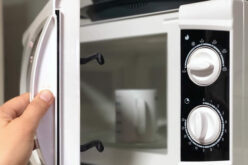
A compact microwave ($39 to $60) handles the bulk of quick meal preparation, from reheating dining hall leftovers to making oatmeal before an early class.
An electric kettle is an equally essential companion — typically available for under $25 — that handles instant noodles, hot cocoa, pour-over coffee, and herbal tea without requiring a stove or microwave cycle.
If you rely on coffee to function through early lectures, a basic drip coffee maker at around $25 is far more economical than a pod-based system.
A Keurig costing $80 to $150 produces coffee at $0.50 to $0.80 per cup once K-cup costs are factored in, while a drip machine produces the same beverage for $0.15 to $0.20 per cup. Over an academic year, that difference adds up significantly.
Personal Comfort Items
One in three college students experiences depression and/or anxiety, according to NASPA research on campus mental health. A dorm room that feels livable and comforting — not institutional — is not a luxury. It is a meaningful part of your wellbeing strategy, and it does not require significant spending to achieve.
Start with quality bedding, which offers the best cost-per-use of any item you will purchase. You will sleep in your dorm bed for approximately 250 nights over the academic year.
A good twin XL sheet set ($40 to $60), a supportive pillow ($25 to $40), and a quality comforter or duvet ($30 to $50) bring the per-night cost to well under a dollar. Purchasing cheap bedding that disrupts your sleep is a false economy — poor sleep directly affects academic performance, mood, and immune function.
Beyond bedding, a cozy throw blanket stored in a wicker or fabric basket beside your desk or bed adds warmth and a sense of home without consuming storage space.
Clip-on bed lights or a simple desk lamp with a warm-toned bulb creates a gentler ambiance in the evenings than the harsh overhead lighting typical of most dorm rooms, and the psychological benefit is real. A few photographs printed for $0.25 each and affixed with poster putty can personalize your walls without cost or permanence.
Tech and Study Aids
Dorm rooms are notorious for having too few electrical outlets for the number of devices a modern student operates. A surge-protecting power strip with built-in USB ports is a non-negotiable purchase.
At $10 to $20, it is used every single day — often multiple times — making its cost-per-use among the lowest of any item in your room. Choose a model with a long cord (six to ten feet) so it can be positioned flexibly without straining the nearest outlet.
A portable power bank is the logical companion to a power strip, covering the hours when you are away from your desk.
Reliable options are widely available for $20 to $40, providing multiple full charges for a smartphone — genuinely useful during long days of classes, library sessions, and campus activities when reaching an outlet is not always possible.
Noise-canceling headphones represent the most impactful study tool on this list. Research consistently supports their value for students: by reducing ambient noise by up to 95 to 98 percent depending on the model, they create a focused environment that is otherwise nearly impossible to achieve in a shared dorm room or busy library.
Budget-friendly options such as the soundcore Life Q30 (approximately $50) offer hybrid active noise cancellation and up to 40 hours of battery life — performance that directly competes with models priced three times higher.
Used daily across 250 study days, a $50 pair of noise-canceling headphones costs $0.20 per session. Few academic investments offer a comparable return.
Finally, a dedicated desk lamp in the $15 to $30 range ensures you have consistent, appropriately directed light for reading and writing regardless of the time of day or what your roommate is doing on the other side of the room.
other related articles of interest:
The Ultimate Dorm Room Setup Guide: From Empty Space to Personalized Sanctuary
Spend Smart, Live Well
A well-outfitted dorm room is not the result of buying everything on a list someone else wrote — it is the result of buying the right things intentionally. The items covered here share a common quality: they earn their place through consistent, high-value daily use.
Smart vertical storage eliminates clutter. Multi-functional furniture maximizes every square foot. Compact kitchen tools reduce food spending. Quality comfort items protect sleep and mental health. And essential tech ensures you can study effectively in an environment that is not always conducive to focus.
Students who approach dorm shopping this way consistently spend $400 to $600 on their setup rather than $1,200 to $1,500 — and they end the year having used nearly everything they purchased. Move-in is a fresh start. Make it a financially sound one.
Image Credit: cheap dorm decor by envato.com
end of post … please share it!
PAYING FOR COLLEGE: getting the aid you need
-------------------------------------------------------------------------------------------------------------
end of post idea
-------------------------------------------------------------------------------------------------------------
view home improvement ideas at our Photo Remodeling center
Helpful article? Leave us a quick comment below.
And please share this article within your social networks.