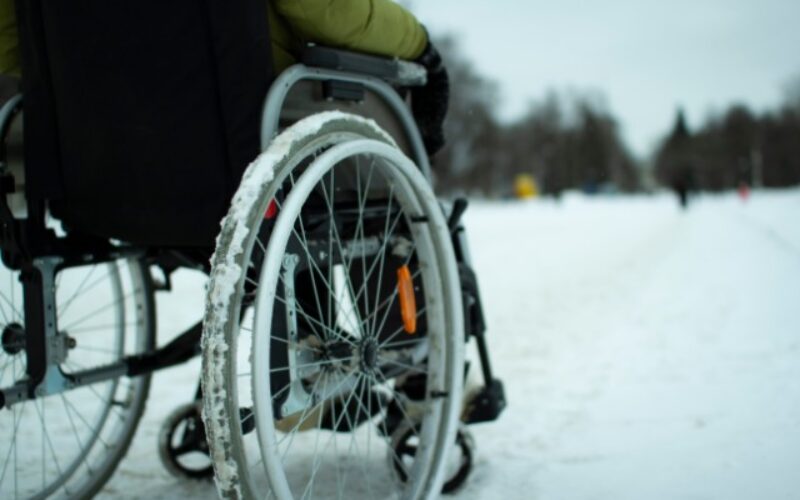
A few smart habits can make winter travel safer and a lot less stressful.
The goal isn’t to avoid campus life during cold weather. The goal is to stay prepared so you can move through your routine with more confidence and fewer surprises. Use these winter weather safety tips to stay safe while using your wheelchair.
Dress for the Conditions
Good winter safety starts before you head outside. Warm layers help, but comfort matters just as much as temperature. Gloves that let you grip wheels, controls, or bags can make a big difference. A heavy coat that restricts arm movement can make travel harder, so look for outerwear that keeps you warm without limiting mobility.
Water-resistant blankets, lap covers, and insulated accessories can also help you stay comfortable during longer trips across campus. Cold weather can feel more intense when you sit outside for extended periods, especially while waiting for transportation or help at a building entrance.
Watch the Route
Winter weather can change a familiar path very quickly. A sidewalk that looked clear in the morning may become icy by the afternoon. Before leaving your dorm or apartment, think about the safest route instead of the shortest one. A path with better snow removal, smoother pavement, and reliable curb cuts may save time and reduce risk.
Campus accessibility offices and shuttle services may post updates during bad weather, so checking alerts can help you avoid blocked entrances or unsafe walkways. It also helps to build a little extra time into your schedule. Rushing across wet pavement or around packed snow can make any trip harder than it needs to be.
Keep Equipment Ready
Your wheelchair needs extra attention during the winter months. Moisture, slush, and road salt can build up fast, and those conditions can affect traction and performance. Wiping down wheels and other exposed parts after time outside can help reduce grime and keep the chair working smoothly.
Battery users should pay close attention during colder weather because low temperatures can affect battery performance. Manual wheelchair users should also watch for slippery hand rims and frozen buildup around moving parts. If you use accessible transportation, remember that weather affects wheelchair lifts, and icy conditions can slow loading, unloading, or mechanical function. That makes it even more important to leave early and have a backup plan when possible.
Stay Visible and Connected
Winter days get dark early, and reduced visibility can create another safety concern. Reflective gear, bright outerwear, or small lights on your chair or backpack can help others see you in low light, snowfall, or foggy conditions. Drivers, cyclists, and pedestrians all need more time to react during rough weather.
It also helps to keep your phone charged and within easy reach. Save numbers for campus transportation, campus security, roommates, and close friends. If the weather turns worse while you are out, you want a quick way to ask for help or adjust your plans.
Know When To Pause
Some winter days call for extra caution, and some call for a change of plans. If ice covers ramps, sidewalks remain uncleared, or winds make outdoor travel difficult, staying put for a little longer may be the smartest choice. Missing one trip across campus is better than risking an injury.
That choice does not mean giving up independence. It means reading the conditions and making a strong decision based on what the day looks like.
Winter weather can create real challenges for wheelchair users on campus, but using the above tips can make daily life much more manageable. Warm clothing, thoughtful route planning, regular equipment care, and strong communication all help reduce stress and support safer travel.
College life doesn’t stop when temperatures drop, and neither should your confidence. When you plan ahead and stay aware of changing conditions, you can move through winter with more comfort, safety, and control.
Image Credentials: andreysha74, # 321974039
end of post … please share it!
PAYING FOR COLLEGE: getting the aid you need
-------------------------------------------------------------------------------------------------------------
end of post idea
-------------------------------------------------------------------------------------------------------------
view home improvement ideas at our Photo Remodeling center